
AI can help a writer express coherent ideas in plain English. But where language itself becomes the art—through rhythm, resonance and emotional association—AI risks replacing authorship with imitation.

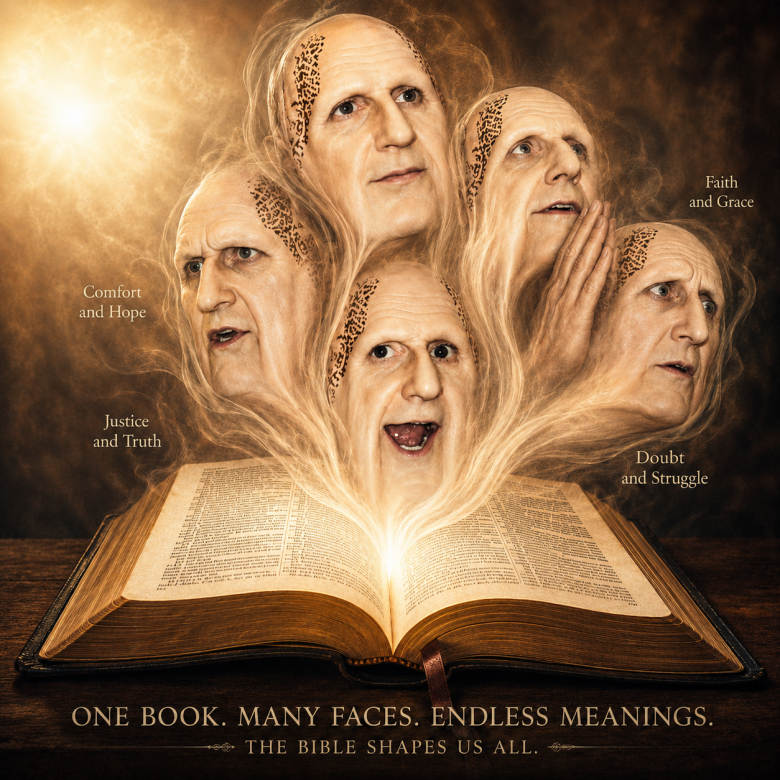
The Bible does not possess one unchanging historical meaning. Like law, politics and art, it is continually interpreted, selected and reshaped. Its special danger lies in the authority granted to those interpretations, which are often presented not as human judgments but as the unquestionable will of God.

We all live according to an internal version of ourselves. Robert Burns’s famous lines invite us to consider what might happen if our private portrait met the person others actually encounter.

American evangelicalism has developed from a theology of personal conversion into a powerful cultural and political movement. Although its most politicised white conservative form now dominates the Republican Party, it represents neither all American Christians nor a majority of the American people.

Christianity began as a Jewish messianic movement, not as the fully developed religion later enforced by Rome. This article traces how Jesus, the hoped-for deliverer of Israel, was transformed through resurrection belief, Pauline theology, Greek philosophy and imperial authority into the universal saviour of Christian orthodoxy.
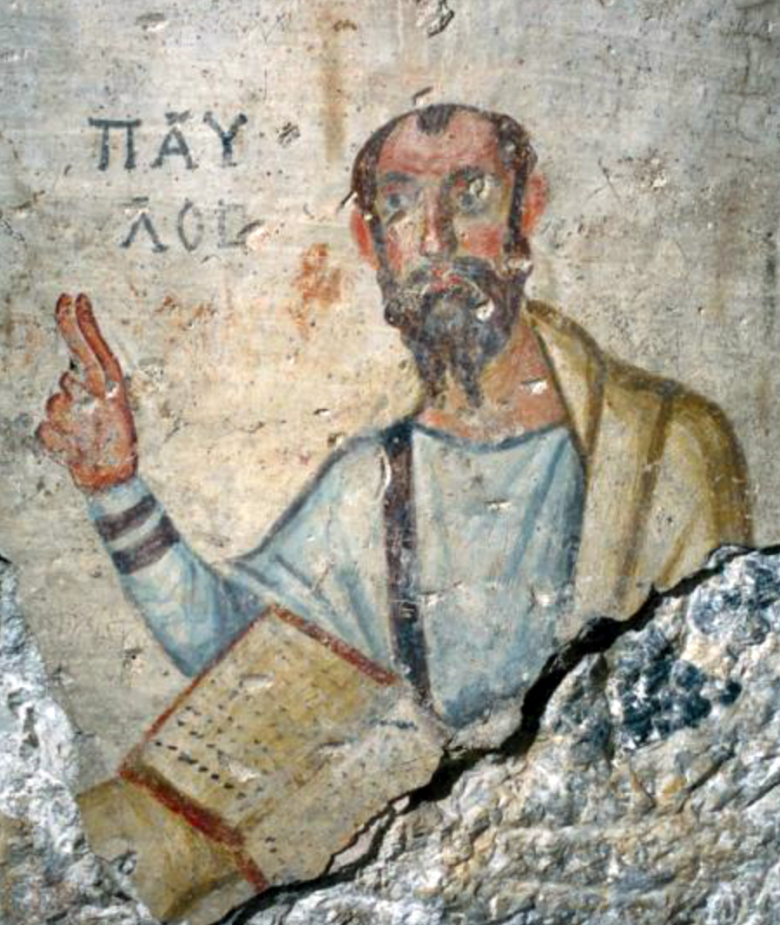
The earliest Christian movement began as a Jewish proclamation that God had raised the crucified Jesus, exalted him as Messiah and Lord, and would soon send him back to complete the kingdom. Over the following centuries, theologians and councils transformed that narrative faith into a detailed metaphysical system defining the Trinity, the nature of Christ and the boundaries of orthodoxy. The resulting Christianity was recognisably descended from the earliest Jesus movement, but it was no longer identical with it.
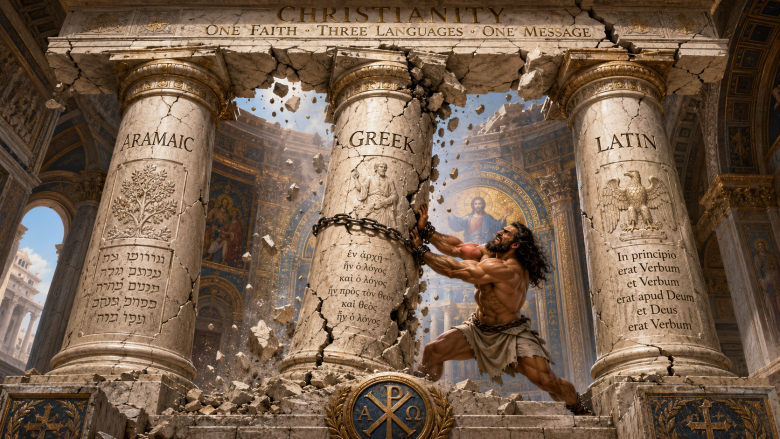
Christianity did not emerge fully formed from the teaching of Jesus. It developed through three linguistic and intellectual worlds: Aramaic preserved its Jewish origins, Greek transformed the remembered teacher into a universal theological figure, and Latin organised the faith through doctrine, law and institutional authority.
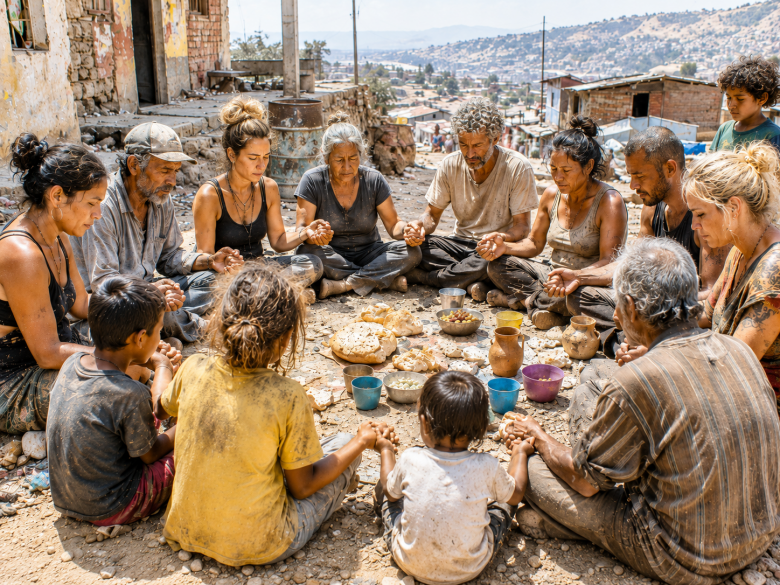
Psalm 133 leads into a reflection on praise, consciousness and the Eucharist. The Host is understood not as a renewed sacrifice, but as a physical expression of thanksgiving, communion and commitment to the life, love and care taught by Jesus.
The significance of the 2026 weather in France and Spain lies not simply in heat, drought or flooding, but in the speed of the transition between them. Saturated soils and swollen rivers were followed within months by exceptional warmth, rapid drying and destructive wildfires. These events do not prove every claim made in Parasol Lost, but they strengthen its central warning: climate risk is increasingly defined by violent swings between extremes rather than by gradual, predictable change.
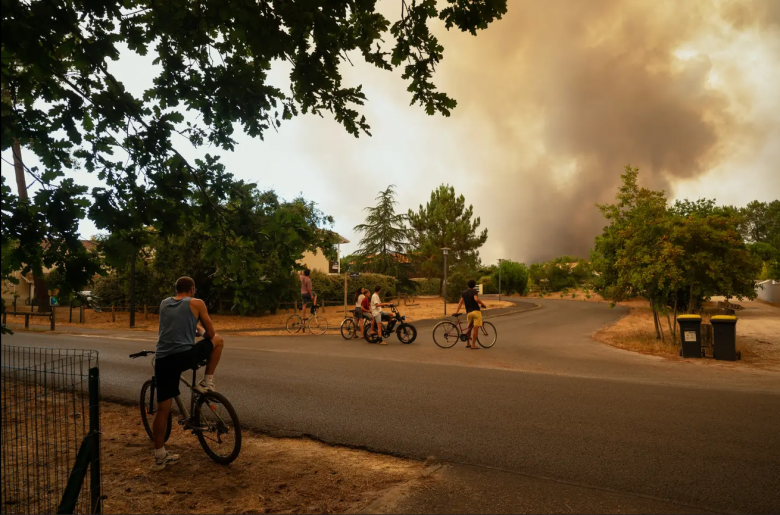
In 2026, Spain experienced the same violent climatic reversal as Bordeaux and the Gironde: months of storms, flooding and saturated ground followed by rapid drying, repeated heatwaves and destructive wildfires. The wet winter encouraged abundant vegetation, which later dried into fuel. Spain, too, went out of the swimming pool and into the fire.