
How did a Jewish teacher executed around 30 CE become, within a few centuries, the centre of an elaborate theology defining him as fully divine? This article follows the development from Paul and the Gospels through Marcion, Irenaeus, Arius, Athanasius, Constantine and the great councils of the fourth and fifth centuries.
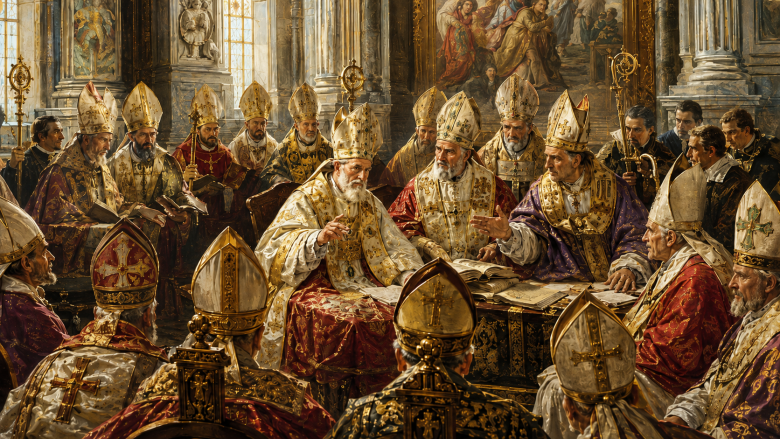
What happens to the memory of a charismatic teacher after his death? From Jesus to Osho, the growth of institutions, rival interpretations and later doctrines may be less surprising than it first appears.
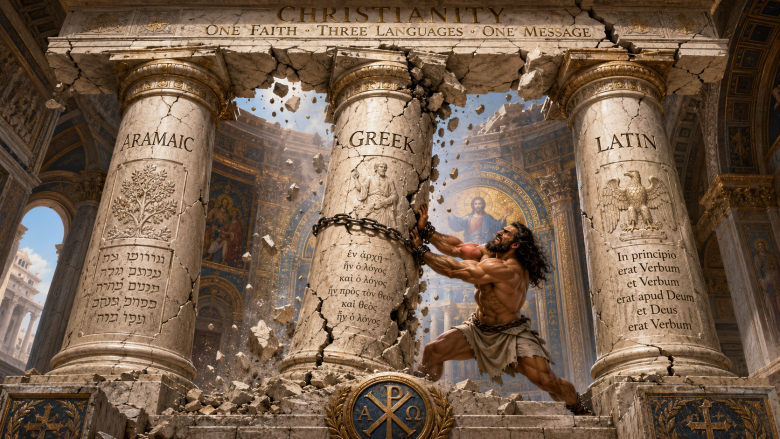
Christianity did not emerge fully formed from the teaching of Jesus. It developed through three linguistic and intellectual worlds: Aramaic preserved its Jewish origins, Greek transformed the remembered teacher into a universal theological figure, and Latin organised the faith through doctrine, law and institutional authority.

Christianity may be historically doubtful and institutionally distorted, yet it preserves ancient mysteries of sacrifice, renewal, death, reconciliation and transformation. Are these recurring themes merely products of the human mind, or echoes of something humanity once encountered?
Jesus’ teaching about death and resurrection did not emerge in isolation. He was a man of his time, taking part in a vigorous Jewish debate shaped by apocalyptic expectation, Greek thought and conflicting ideas about the fate of the dead.
The “Holy Spirit” of Christianity is not a continuation of the Hebrew ruach but a mistranslation that became a doctrine. What began as the roar of wind in the Old Testament turned into an abstraction in Luke–Acts — and finally into a third “person” of the Trinity.