
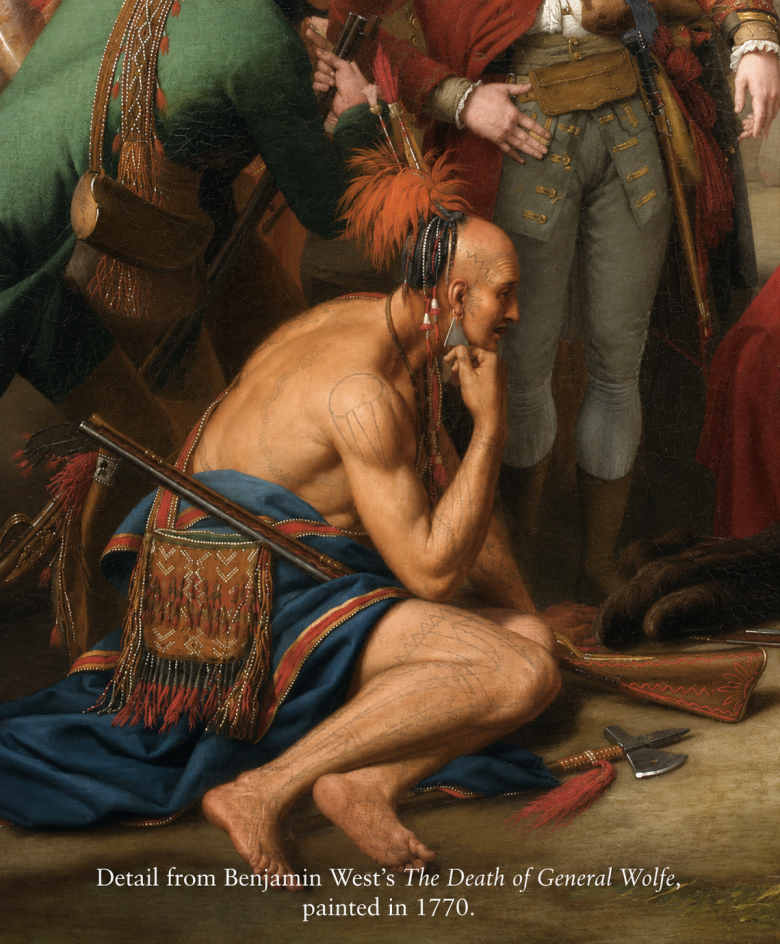
For the French Romantics, the American Indian represented more than an exotic other. He became a symbolic figure through whom Europe reflected on its own condition: freedom and estrangement, nature and civilisation, innocence and loss. In writers such as Rousseau and Chateaubriand, Indigenous America appeared as a world less divided, less artificial and closer to nature, even if that vision often told us as much about European longing as about Native American reality.

Warwick Thornton’s The New Boy presents the forced assimilation of an Aboriginal child as a spiritual desecration. Taken from the freedom of the landscape into a remote Christian orphanage, the boy is clothed, disciplined, named and baptised before he can understand what is being done to him. The only English word he learns is “Amen”: not the language of thought or self-expression, but the language of assent.

A society rests upon shared stories, moral expectations and inherited institutions. The task is to distinguish the life-giving elements of its foundational narratives from the historical constructs that have gathered around them.

argon once obscured meaning. Today, institutional language often goes further: it defines the permitted interpretation before discussion begins. When words carry an approved moral judgement and an intended conclusion, language ceases to serve inquiry and begins to police thought.

Erich von Däniken’s interpretation of Fátima is speculative, but he is careful to present it as a question rather than a certainty. The Vatican’s published version of the Third Secret raises a wider issue: institutions tend to preserve the narratives upon which their authority depends.

Eine kritische Zwischenbilanz zu Gerald Grosz’ Ab nach Hause: über den unklaren Begriff der Remigration, einen überladenen Stil und die Rhetorik der Verachtung.
The *Janet and John* books are now criticised for their lack of diversity, but their more serious weakness was educational. The look-and-say method encouraged children to memorise whole words instead of learning systematically how letters represent sounds. For some baby boomers, the consequences may have lasted a lifetime.
Cupitt took leave of an external God while continuing to search for a viable religion. I waded through a sea of doubt until I reached a different shore: God exists inwardly, as a personal reality formed through consciousness, experience and the human disposition towards goodness.
Reason can expose prejudice, but it can also be recruited to defend it. Philosophy tests inherited assumptions; poetry enlarges sympathy by restoring the individual behind the label.
Religions arose from genuine human experiences, but their interpretations hardened into objective truths. Reification turns symbols into dogma and inherited belief into a prejudiced way of seeing the world.