Introduction
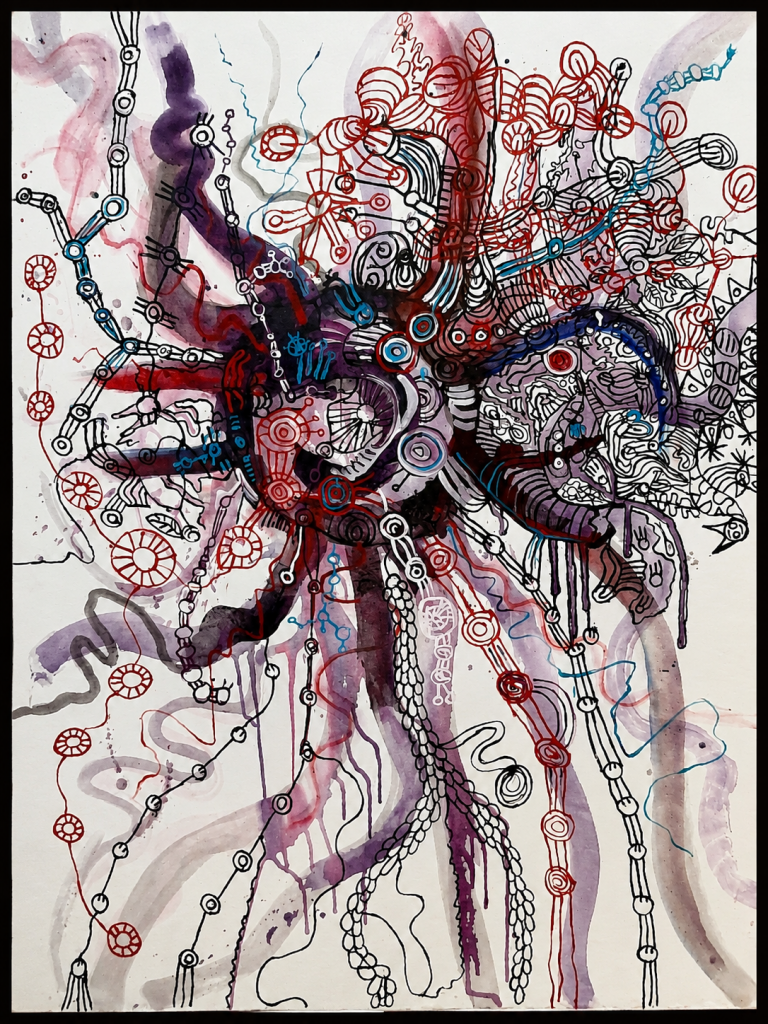
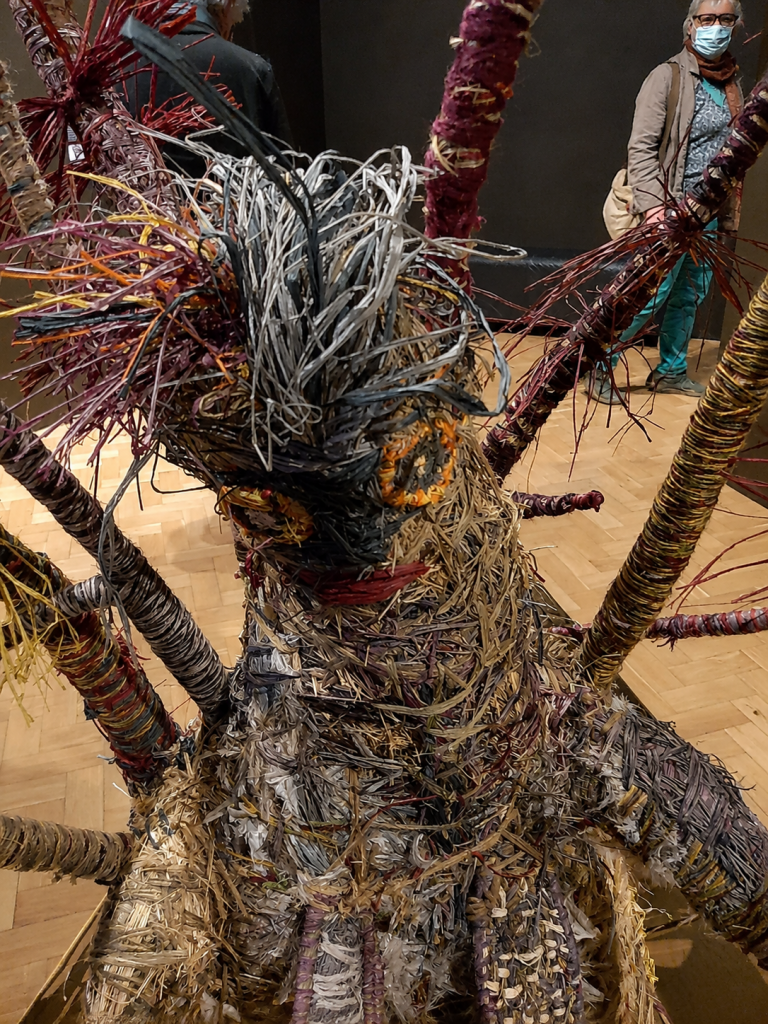
From 21 October 2021 to 27 February 2022, The Box in Plymouth hosted the European premiere of Songlines: Tracking the Seven Sisters, an exhibition created by the National Museum of Australia and conceived and curated by First Australian elders, artists and knowledge-holders, led by senior Indigenous curator Margo Neale. It formed part of the UK/Australia Season 2021–22 and extended across The Box and the Levinsky Gallery at the University of Plymouth. (The Box Plymouth)
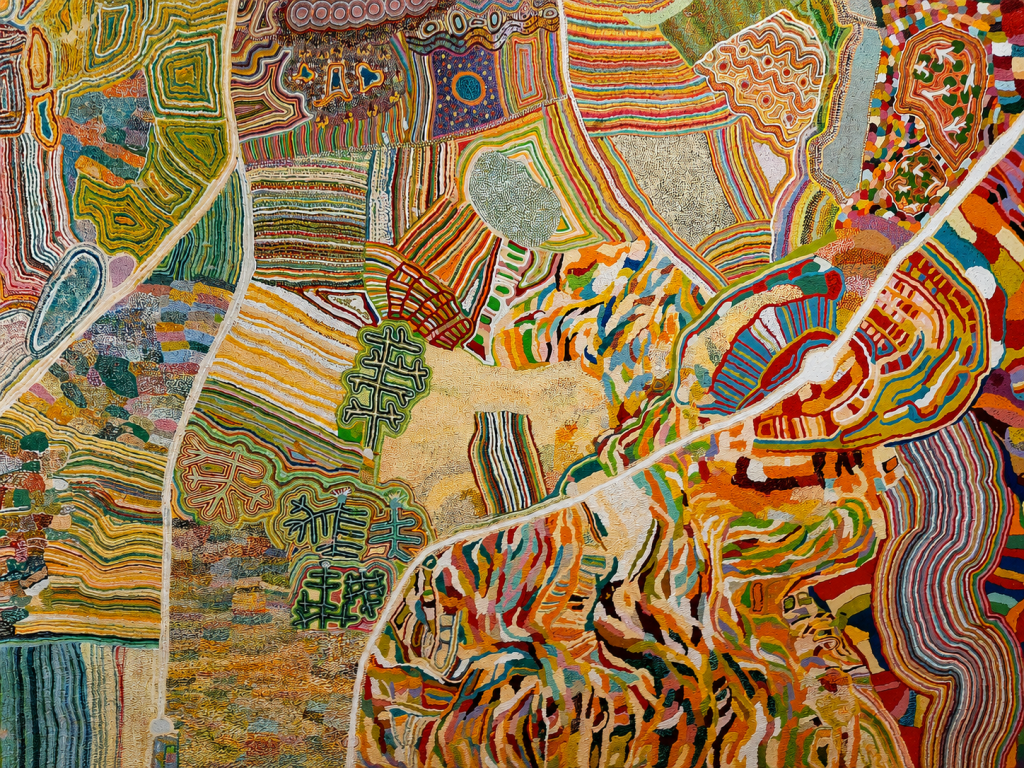
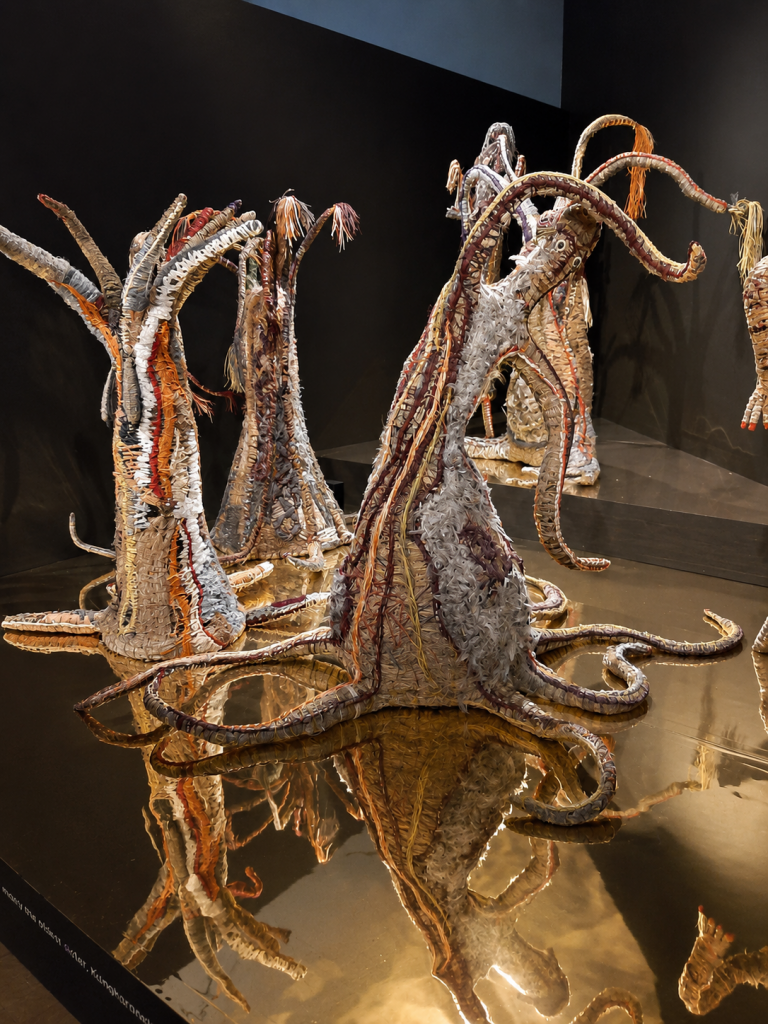
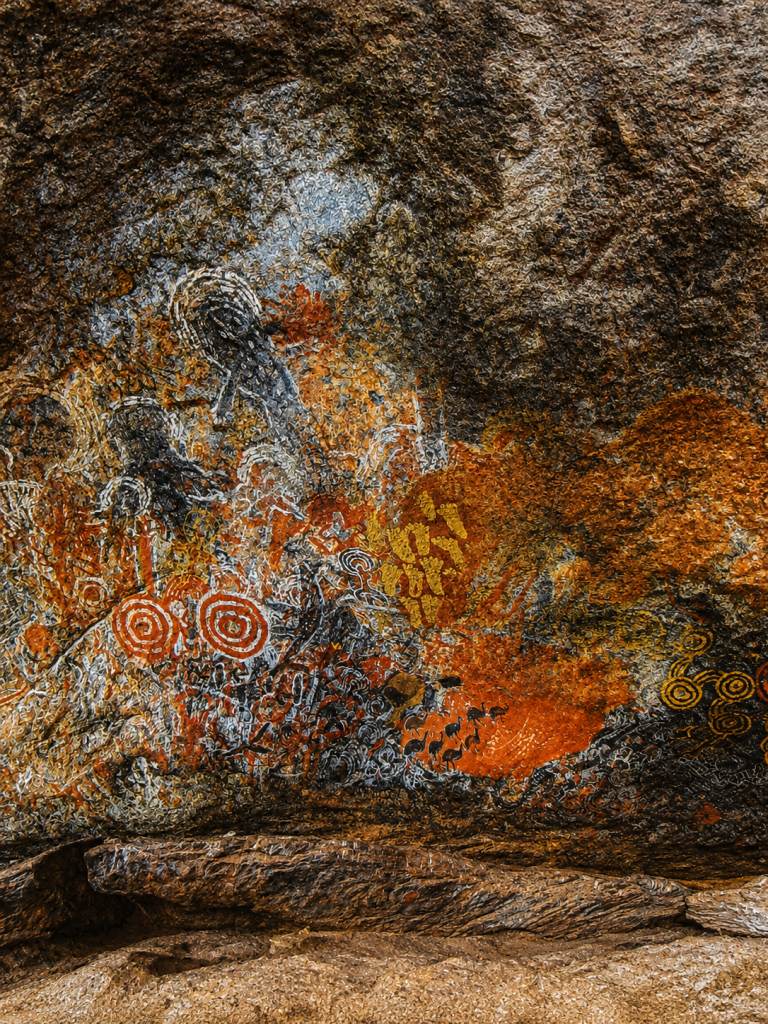
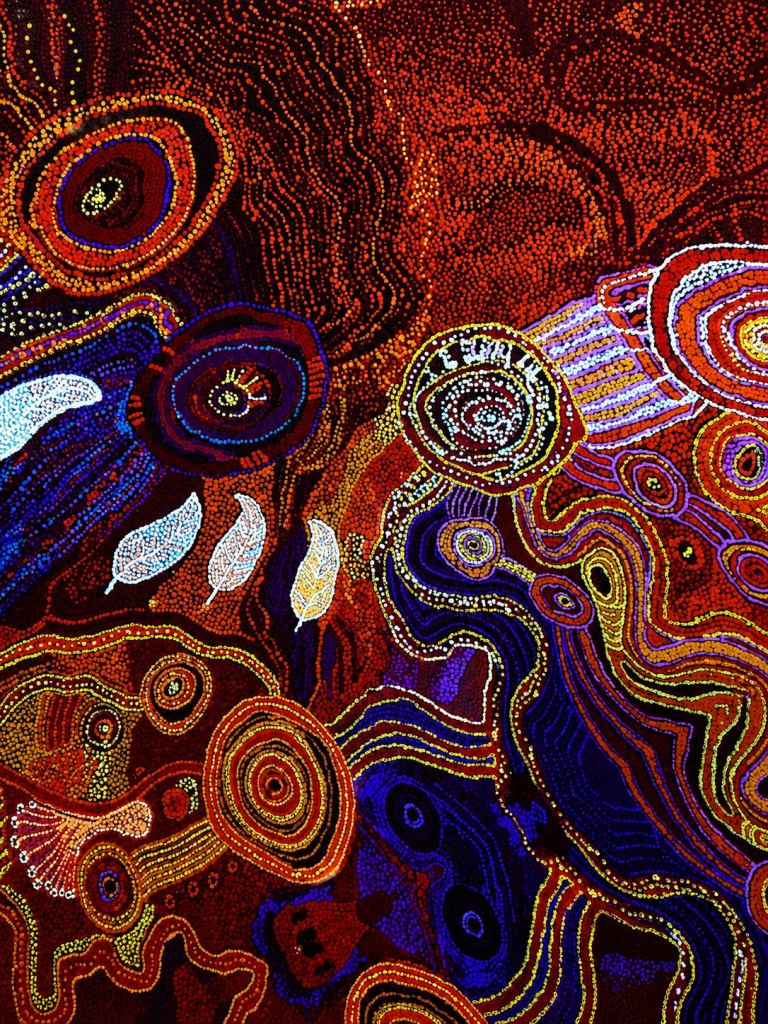
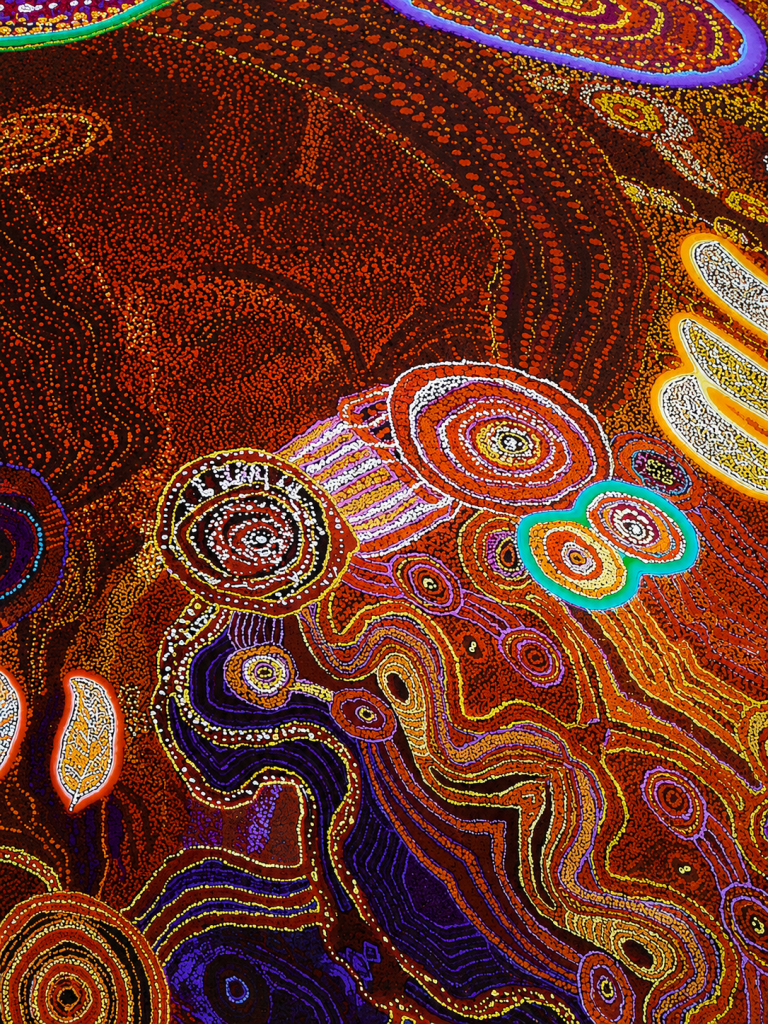
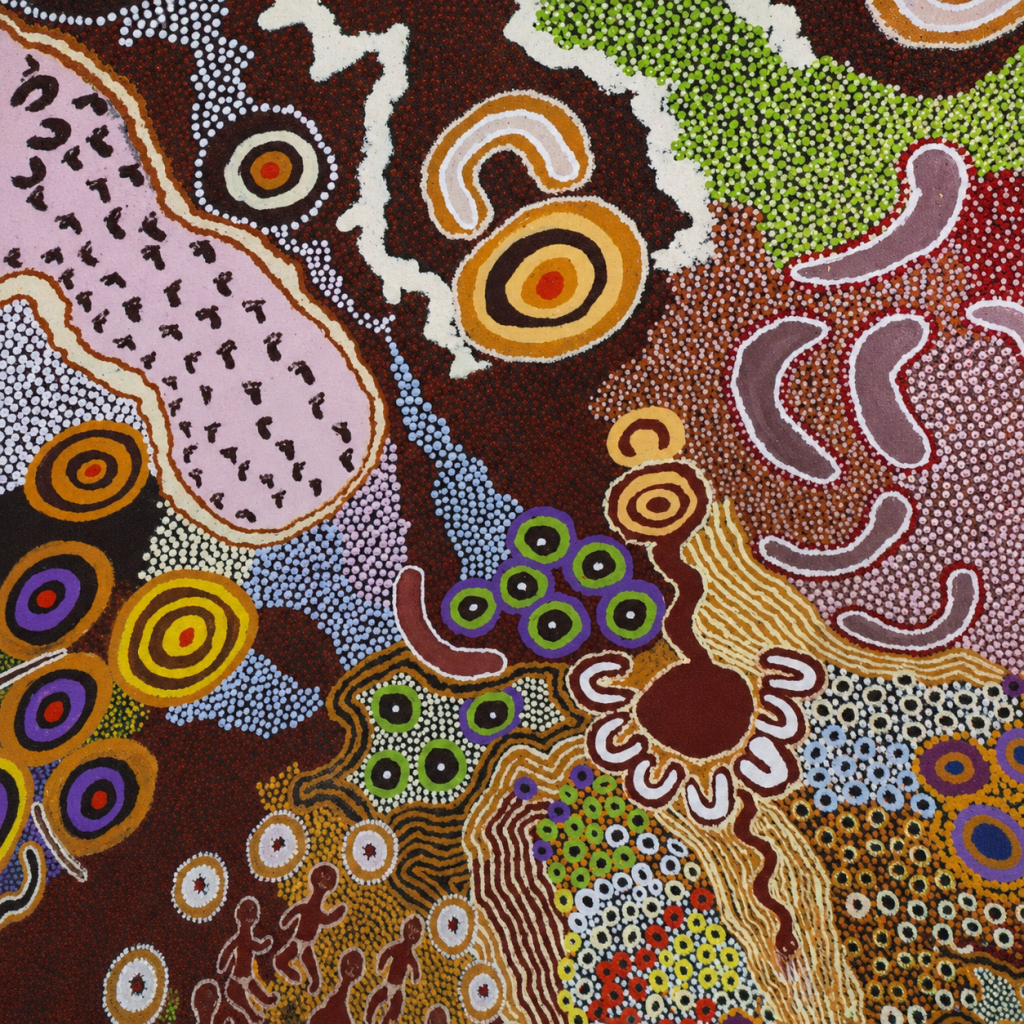
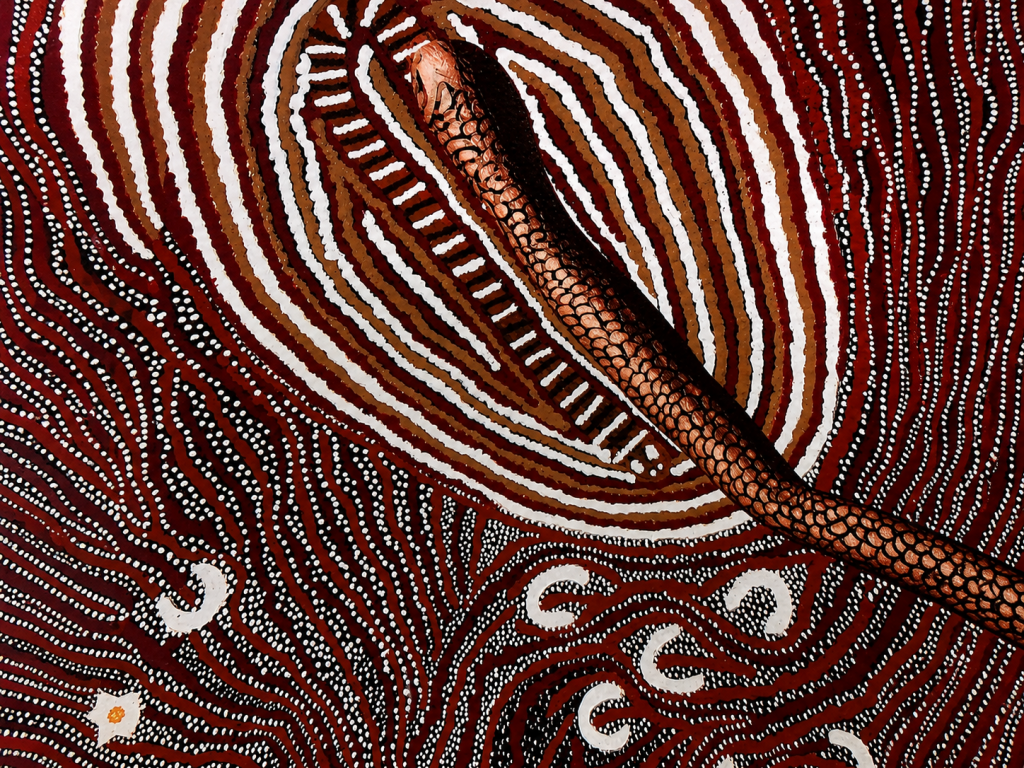
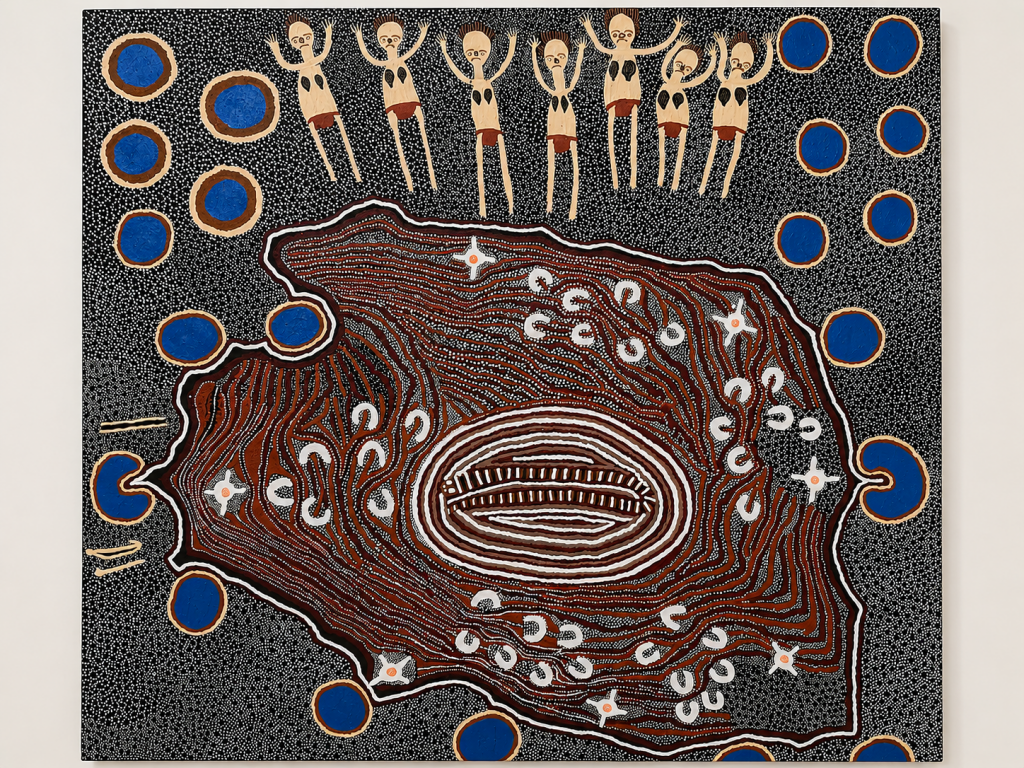
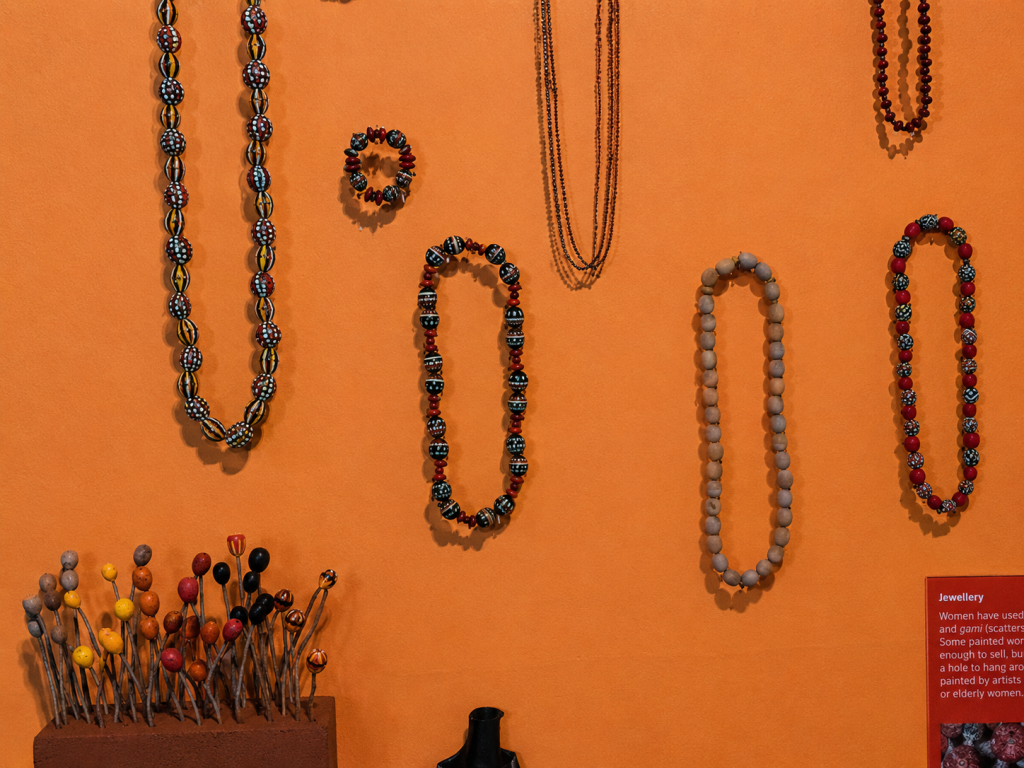
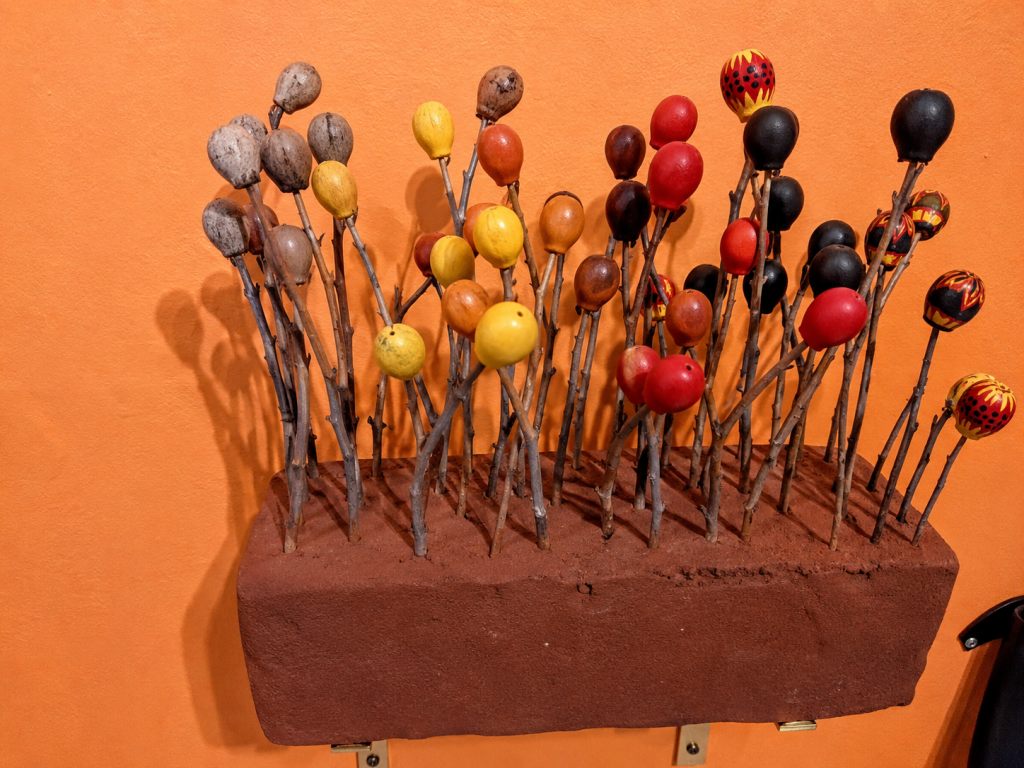
The exhibition brought together around 300 paintings and objects by more than 100 artists. Some of the works were vast, almost mural-like, but the exhibition was not simply a display of Aboriginal painting. Through art, song, performance, photography, film and immersive digital installations, it traced the Seven Sisters Songline across three Australian states, three deserts and approximately 500,000 square kilometres. (The Box Plymouth)
At its centre was the ancient story of the Seven Sisters, represented in the night sky by the Pleiades, pursued across Country by an ancestral male figure associated with Orion. The story exists in different forms among different Aboriginal peoples. It is not merely a myth in the European sense, but part of a living system of knowledge linking landscape, ancestry, law, ceremony, navigation, memory and moral obligation.
A Songline may therefore be understood as far more than a route across the land. It is at once a story, a map, a body of practical knowledge and a means by which relationships between people, Country and the ancestral world are preserved and transmitted. In many traditions, earthly routes are also related to patterns in the sky. (arXiv)
What made the Plymouth exhibition remarkable was that it did not treat Aboriginal culture as a vanished object to be classified by outsiders. It arose from the wish of custodial communities to preserve the Seven Sisters stories for future generations and to share selected parts of that knowledge with a wider audience. The paintings were therefore not merely representations of Country. They were expressions of an order in which land, story, spirit and human responsibility remain inseparable. (The Box Plymouth)
For a European audience, the exhibition posed an unsettling question. What colonial civilisation damaged was not simply a collection of customs or artistic styles. It damaged a way of apprehending reality—one in which the world is not divided neatly into nature and culture, fact and story, matter and spirit. Songlines: Tracking the Seven Sisters offered a glimpse of that other coherence, and of what may be lost when one civilisation assumes that its own categories are the only possible form of truth.




1. The First Peoples of Australia
The ancestors of today’s Aboriginal Australians were not present from the beginning of Homo sapiens. Like all modern human beings, their more distant ancestors came ultimately from Africa. Yet they reached the continent we now call Australia extraordinarily early. Archaeological evidence from Madjedbebe in northern Australia indicates human occupation by about 65,000 years ago. Their arrival required movement through Southeast Asia and crossings over open water into the larger Ice Age continent of Sahul, which then joined Australia, New Guinea and Tasmania more closely than today. (Nature)
Aboriginal peoples have therefore lived in Australia for a length of time that is almost beyond the European historical imagination. But we should not convert that antiquity into another Romantic myth.
Aboriginal peoples were human beings, not ecological innocents possessing supernatural harmony.
Yuval Noah Harari’s argument in Sapiens is deliberately uncomfortable. He maintains that human beings were agents of environmental destruction long before factories, capitalism or European empire. Wherever Homo sapiens entered a new continent, large animals often disappeared. Australia, in his account, was one of the earliest examples.
The chronology certainly invites the question. Human beings arrived in a continent inhabited by giant marsupials, reptiles and birds, and much of that megafauna later vanished. But Harari presents a disputed historical argument rather more confidently than the evidence warrants. Scientists still debate the relative effects of hunting, fire, climatic change and ecological disruption. The Australian Museum concludes that climate and human influence may both have contributed, while acknowledging that it remains difficult to establish which extinctions were caused by Indigenous people. (The Australian Museum)
The ancestors of Aboriginal Australians almost certainly changed the environments into which they moved. They hunted animals, gathered plants, used fire and altered the balance among species. They possessed no magic exemption from ordinary human appetite, ingenuity or error.
The more remarkable achievement came afterwards. Over tens of thousands of years, many distinct Aboriginal societies developed systems of knowledge, law and obligation adapted to particular environments. These were not static societies, nor were they all alike. Australia contained hundreds of peoples, languages and cultural traditions, each connected with particular areas of Country.
Their relationship with the natural world should not be reduced to the modern phrase “living sustainably”. It rested upon a different understanding of reality. Country was not merely land considered as soil, scenery or property. It included water, plants, animals, ancestors, stories, laws, ceremonies, identity and responsibility. Human beings did not stand outside this order as its owners. They belonged within it.
That is the point at which theology enters the discussion—not theology as a formal creed, but as a society’s deepest account of what the world is, what human beings are and what obligations follow from their existence. Aboriginal cultures did not abolish greed, violence or conflict. What many of them developed was a moral ecology capable of restraining appetite by placing the individual within relationships extending beyond the self.
The true contrast, therefore, is not:
destructive Europeans versus naturally innocent Aboriginal people.
It is closer to this:
one form of humanity which, over immense stretches of time, developed obligations tying survival to Country, and another whose developing economic theology increasingly treated the world as property available for conversion into wealth.
That distinction matters. Aboriginal achievement did not lie in never having disturbed nature. It lay in learning that human life could continue only within relationships of restraint, renewal and reciprocity.
2. The Conflict of Two Cultures
When British colonisation began in 1788, it did not bring civilisation into an empty country. It brought one civilisation into territories already inhabited, known, named and governed according to many different Indigenous laws and traditions.
British society carried with it an alien system of reference. Land was surveyed, divided, fenced, sold and inherited. Its value could be expressed in acreage, rent, livestock, minerals or profit. Places that possessed ancestral, ceremonial and moral meaning were treated as physical resources. The legal fiction later associated with terra nullius enabled the colonial order to behave as though the continent belonged to no one whose ownership British law was obliged to recognise. That fiction was not overturned in Australian law until the Mabo judgment of 1992. (AIATSIS)
This was not only a conflict over territory. It was a collision between two understandings of reality.
For Aboriginal peoples, Country could not readily be separated from ancestry, law, language and identity. To remove people from their land was therefore not merely to deprive them of property. It was to rupture the structure through which life possessed meaning.
The theft of land became, in that sense, a robbery of soul.
Colonisation brought disease, violence, the destruction or restriction of food sources, displacement from water and hunting grounds, and the breaking of relationships between communities and Country. Later, missions, reserves and government stations attempted to regulate almost every part of Indigenous life. People were separated from their lands and families, restricted in movement, discouraged or forbidden from speaking their languages, and prevented from passing cultural practices to their children. (AIATSIS)
The forced removal of children carried this process into the centre of the family. Across generations, governments, churches and welfare organisations removed Aboriginal and Torres Strait Islander children and placed them in institutions, foster homes or adoptive families. These children became known collectively as the Stolen Generations. (AIATSIS)
The colonial power rarely described these policies as cultural destruction. It used words such as protection, education, conversion, improvement and assimilation. The social lie lay partly in the language: dispossession could be represented as benevolence because the colonisers assumed that their own values formed the universal measure of human advancement.
At the heart of the imported order was an economic theology. Land existed to be made productive; labour to be organised; resources to be extracted; wealth to be accumulated. Christianity itself sometimes resisted these assumptions, but the churches were also frequently entangled with them. Biblical language could be used to justify possession and obedience while the Bible’s own condemnation of greed and dispossession was pushed aside.
The passage I remember from Isaiah belongs to the prophet’s vision of a restored world:
“They shall build houses and inhabit them;
they shall plant vineyards and eat their fruit.
They shall not build and another inhabit;
they shall not plant and another eat.”
— Isaiah 65:21–22 (Bible Gateway)
This is not merely a charming agricultural scene. It is a declaration against dispossession. Those who build will not see others seize their houses. Those who plant will not see others consume the harvest. Human beings will once again enjoy the fruit of their own labour within a secure relationship to land and community.
Elsewhere Isaiah condemns those who join “house to house” and “field to field” until there is no room left for anyone else. The prophetic criticism is directed against accumulation which drives others from the means of life.
The phrase about money comes not from Isaiah but from the First Letter to Timothy:
“The love of money is the root of all kinds of evil.”
— 1 Timothy 6:10
The qualification matters. Money itself is not identified as the source of every evil; it is the elevation of wealth into the governing object of desire. Once acquisition becomes the final point of reference, people, cultures and landscapes are valued according to their usefulness to the process of accumulation.
That gives the conflict between Aboriginal cultures and British colonisation a theological dimension. The collision was not simply between primitive and advanced peoples, nor between innocence and wickedness. It was between different answers to the question:
What is the world, and what are human beings entitled to do with it?
One answer placed human beings within a living network of Country, ancestry and obligation. The other increasingly placed ownership, productivity and expansion at the centre. Neither culture consisted of saints. But one had spent tens of thousands of years developing limits appropriate to the continent; the other arrived with ships, firearms, livestock, legal documents and a confidence that its own categories constituted reality.
The Songlines exhibition gains its force from this history. The paintings do not offer evidence of an untouched paradise. They testify to the survival of systems of memory and meaning which colonisation attempted to displace. Their importance lies not in proving that Aboriginal peoples possessed some lost supernatural harmony, but in showing that humanity has developed other ways of understanding its place within the world—and that our own is neither inevitable nor beyond judgement.


