
Jesus, apocalyptic expectation and the construction of Christianity
One of the most troubling features of Christianity is the apparent arbitrariness of its central event. If God intended to intervene decisively in human history, why did he wait so long? Why choose first-century Judaea: a small, turbulent and largely illiterate province under Roman occupation? Why entrust a universal revelation to oral transmission, uncertain memory and documents written decades later in a language other than that normally spoken by Jesus?
These questions become more serious when placed within their historical setting. Jesus did not appear from nowhere. The ideas surrounding him—angels, demons, resurrection, final judgement, the Son of Man and the imminent transformation of the world—had developed within Judaism over several centuries. His death was subsequently interpreted through those inherited ideas. What began as the career of a Jewish religious and political upstart became a cosmic drama of incarnation, sacrifice and universal salvation.
The historical Jesus may have been remarkable. The supernatural structure erected around him is another matter.
Before apocalypticism: the older materials
Jewish apocalyptic thought did not suddenly begin in the third century BC. Its materials were already present in earlier Israelite religion.
Before about 600 BC, texts such as Psalm 82 and 1 Kings 22 imagined God presiding over a heavenly council. Earthly government had its counterpart in heaven. Subordinate divine beings could be entrusted with authority, misuse it and be called to judgement. The prophets also spoke of the Day of the Lord, when God would judge nations, punish injustice and restore order.
These early prophets generally addressed recognisable political circumstances. Their message was conditional: change your conduct and catastrophe may be avoided. Apocalyptic writing gradually altered that emphasis. History came to be seen as a predetermined sequence whose ending had already been fixed in heaven.
During and after the Babylonian exile, c. 600–500 BC, the visionary machinery became more elaborate. Ezekiel described the divine throne and its supernatural attendants. Zechariah, writing mainly around 520–500 BC, presented symbolic visions explained by angels, heavenly patrols, an accusing Satan and a coming purified order.
These were not yet full apocalypses, but their principal devices were already in place.
The failure of restoration
The Babylonian exile ended, the Temple was rebuilt and Jewish life resumed in Jerusalem. Yet the expected restoration remained incomplete. Judaea continued to exist under foreign rule: Persian from 539 to 332 BC, then Macedonian and Hellenistic after Alexander the Great’s conquest.
The theological difficulty was obvious. If Israel’s God ruled history, why did foreign empires continue to dominate his people? Why had the promised restoration not arrived?
Apocalypticism supplied an answer. God had not failed. The apparent disorder belonged to a hidden timetable. The present age was corrupt, but it was approaching its appointed end. Foreign empires would be destroyed, the righteous vindicated and divine government made visible.
Failure could therefore be reinterpreted as delay; delay became part of the plan.
This mechanism would later become fundamental to Christianity.
Enoch and the emergence of full apocalyptic thought
Between roughly 300 and 200 BC, recognisable Jewish apocalyptic literature appeared. The most important early example is the collection now called 1 Enoch.
Enoch himself did not write it. The work was attributed to the ancient patriarch of Genesis 5, who “walked with God” and was taken by God without dying. Attribution to an ancient sage allowed later writers to present their ideas as primordial revelation rather than recent speculation.
The earliest parts of 1 Enoch, including the Book of the Watchers and probably much of the Astronomical Book, are commonly placed in the third century BC. Later sections were added over the following centuries. An Aramaic Enoch manuscript found at Qumran has been dated to approximately 150–50 BC, demonstrating the book’s circulation in Second Temple Judaism. (The Dead Sea Scrolls)
The Book of the Watchers expands the few obscure lines of Genesis 6:1–4 concerning the “sons of God” and the daughters of men. In Enoch, the sons of God become heavenly Watchers who descend to earth, take human wives and produce violent giant offspring. They also give humanity forbidden knowledge: weapon-making, sorcery, astrology and other arts.
The story provides an explanation of evil different from the later Christian doctrine of inherited guilt. The world is corrupted not simply because the first human couple disobeyed, but because heavenly beings betrayed their office and knowledge outran wisdom.
Enoch also contains journeys through heaven and the underworld, angelic hierarchies, cosmic prisons, calendars, resurrection, judgement and figures called the Chosen One, the Righteous One and the Son of Man. It belongs to the imaginative world from which Daniel, parts of the New Testament and Revelation would later emerge.
Its value is not that it records events before the Flood. It shows what certain Jews of the Hellenistic period had come to believe about cosmic order, evil and history. Parts of Enoch survive among the Dead Sea Scrolls, and the Letter of Jude later echoes 1 Enoch 1:9. The Christian supernatural vocabulary did not arrive fully formed with Jesus. It had a substantial prehistory.
Daniel and persecution: 167–164 BC
Jewish apocalypticism reached a decisive stage during the persecution conducted by the Seleucid ruler Antiochus IV Epiphanes.
The stories in Daniel are set during the Babylonian exile, but the final visions in Daniel 7–12 belong to the crisis of approximately 167–164 BC. Antiochus interfered with Jewish worship, profaned the Temple and attempted to suppress traditional observance. Faithful Jews could now suffer or die precisely because they remained faithful.
That created a problem which older ideas of justice could not resolve. If God rewarded righteousness within this life, why were righteous people tortured and killed while collaborators prospered?
Daniel’s answer moved justice beyond death. The martyrs would rise; the wicked would face judgement; earthly defeat was not final. History was represented as a succession of monstrous empires, while the faithful received the promise of resurrection and divine vindication.
The apocalyptic imagination had now acquired most of its mature features:
- successive predetermined ages;
- earthly kingdoms represented as beasts;
- angelic rulers of nations;
- resurrection;
- final judgement;
- a heavenly figure “like a son of man”;
- the imminent replacement of human empire by divine rule.
The important point is that these ideas arose from historical crisis. They were not detached information about the architecture of heaven. They were a way of preserving faith when ordinary history appeared to refute it.
The Essenes and Qumran: c. 150 BC–AD 68
The Essenes did not invent apocalypticism. They inherited it and turned it into a form of communal life.
The movement probably emerged during the second century BC, amid disputes over the Hasmonean rulers and the Jerusalem high priesthood. Ancient writers such as Josephus, Philo and Pliny describe the Essenes as one of the principal Jewish groupings alongside the Pharisees and Sadducees.
Many scholars connect at least one branch of the Essene movement with the settlement and scrolls at Qumran, near the north-western shore of the Dead Sea. That identification remains probable rather than certain. The Israel Antiquities Authority now describes the Qumran corpus as reflecting related and developing communities rather than the writings of one completely uniform sect. (The Dead Sea Scrolls)
The Qumran community called itself the Yahad, the Community. Its members believed that the Jerusalem priesthood had become corrupt and that they themselves represented the faithful remnant of Israel. They maintained strict rules of admission, ritual washing, communal meals, common discipline and a distinctive calendar.
Most importantly, they believed themselves to be living at the end of the age. History was divided between the Sons of Light and the Sons of Darkness. The War Scroll envisaged a final battle involving both earthly forces and angelic armies. The Community Rule regulated life among those preparing for that conflict.
Apocalypticism had ceased to be merely a form of literature. It governed food, purity, time, membership and social relations.
The Qumran caves contained Enochic writings, biblical texts, commentaries and sectarian works. Most of the scrolls and fragments belong to the Hellenistic and early Roman periods; the Qumran settlement came to an end around the Jewish revolt against Rome, conventionally associated with AD 68. (The Dead Sea Scrolls)
Was Jesus an Essene?
There is no evidence that Jesus was a member of the Essene movement or that he lived at Qumran before beginning his ministry.
The resemblance is nevertheless significant. Jesus and the Qumran community shared an intellectual atmosphere shaped by:
- imminent judgement;
- the expectation of divine intervention;
- hostility towards corrupt religious leadership;
- angels and demonic powers;
- light-and-darkness imagery;
- communal meals;
- dissatisfaction with wealth and social injustice.
John the Baptist stands even closer to the Essene world. He lived in the Judaean wilderness, practised austerity, used immersion and preached imminent judgement. He may have encountered Essenes or similar groups. Yet his baptism appears to have been a public, once-for-all sign of repentance, whereas Qumran’s washings were repeated rites within a closed community.
Jesus also differed sharply from the Qumran sect. The Essenes protected holiness through separation. Jesus, according to the Gospel tradition, ate with tax collectors, sinners and ritually suspect people. The Qumran community divided humanity rigorously between the elect and the condemned; Jesus taught love of enemies, although the Gospels also preserve severe sayings of judgement.
Jesus was therefore not demonstrably an Essene. He was a product of the same broader apocalyptic Judaism but developed a different response to it.
Jesus in his historical setting: c. 4 BC–AD 30
The exact dates of Jesus’ life remain uncertain, but he was probably born shortly before the death of Herod the Great in 4 BC and executed under Pontius Pilate, probably around AD 30.
He appeared in a province marked by Roman occupation, taxation, social inequality, religious division and recurrent hopes of liberation. The Temple stood at the centre of Jewish religious life, but its leadership was entangled with political power. Apocalyptic expectation was widespread, though not universal.
Jesus appears to have preached the approaching kingdom of God, repentance, forgiveness and a reversal of ordinary status. He gathered disciples, challenged religious assumptions and entered Jerusalem in a manner capable of being interpreted politically. Rome executed him by crucifixion, a punishment associated particularly with slaves, rebels and threats to public order.
That much is historically intelligible. A Jewish prophetic preacher emerged during a period of intense religious and political expectation and was killed by the imperial authorities.
The difficulty begins with the immense claims subsequently made about him.
From execution to cosmic sacrifice
Jesus left no writings. His ordinary teaching language was probably Aramaic. Our principal accounts were written later in Greek by authors who organised inherited traditions according to their own purposes.
Paul’s surviving letters, written mainly in the AD 50s, are earlier than the written Gospels. Paul shows that Jesus’ death and resurrection had already become the centre of a theological system within a generation of the crucifixion.
The Gospel of Mark is generally placed around AD 65–75; Matthew and Luke somewhat later, often around AD 80–90; and John near the end of the first century, though all such dates remain approximate. These are not transcripts. They contain remembered sayings, communal traditions, scriptural interpretations and theological construction.
The historical movement therefore proceeded roughly as follows:
a preacher was executed;
his followers remained convinced of his significance;
experiences interpreted as appearances persuaded them that he had been vindicated;
his death was read through Jewish sacrificial, prophetic and apocalyptic traditions;
defeat became part of a divine plan.
Jesus became the Passover lamb, the suffering servant, the righteous martyr, the heavenly Son of Man and eventually the incarnate Son of God.
The death was no longer simply what Rome had done to him. It became what God had sent him to accomplish.
The difficulty of the delay
Traditional biblical chronology placed creation only a few thousand years before Jesus. Even within that compressed scheme, God appeared to wait roughly four or five millennia before providing the sacrifice supposedly required for human salvation.
Modern knowledge makes the problem far greater. Homo sapiens has existed for approximately 300,000 years. (humanorigins.si.edu)
If Christ’s death was necessary to save humanity, why was the remedy withheld for almost the whole existence of the species? Countless human beings lived, suffered and died without knowledge of Israel, Jesus, the incarnation or atonement.
Christian theology often replies that the effects of Christ’s sacrifice operate retrospectively. Those who lived before Jesus might be saved according to conscience, faith or such revelation as they possessed.
But this produces a dilemma. If people could be saved without knowing Christ or his sacrifice, knowledge of the Christian story was not indispensable. If the sacrifice was absolutely necessary, the immense delay becomes morally and logically difficult to explain.
The customary phrase, “the fullness of time,” names the delay without explaining it.
The difficulty of the time and place
First-century Judaea also seems a curious choice for a universal revelation.
It offered:
- limited literacy;
- no printing;
- no contemporary recording;
- slow travel and communication;
- political instability;
- linguistic translation;
- sectarian conflict;
- a high likelihood of execution;
- no dependable means of preserving exact words.
Christian apologists point to Roman roads, widespread Greek and the Jewish diaspora. These undoubtedly helped the later movement spread.
Yet the same circumstances allowed the message to be altered, disputed and institutionalised. The Roman state crucified Jesus and later supplied the political machinery through which one interpretation of him could dominate others.
Had a universal revelation occurred after printing, mass literacy or electronic recording, the teacher’s words could at least have been preserved. God supposedly chose conditions under which the central evidence would remain permanently uncertain: Jesus wrote nothing, and the words attributed to him were preserved orally before being recorded in Greek several decades after his death.
The time and place make good historical sense if Jesus was a figure produced by the crisis of Second Temple Judaism. They make less obvious sense if they were selected by an omniscient deity as the ideal means of addressing all humanity.
The age produced Jesus because it was in crisis. That does not show that God chose the age.
An unclear universal revelation
The Christian claim increases while the evidence diminishes.
The modest historical conclusion is plausible:
A Jewish preacher taught, gathered followers, challenged authority and was crucified.
The metaphysical conclusion is far larger:
He was conceived without a human father, existed before birth, embodied God, died as a sacrifice for universal sin, rose bodily from death and will judge every human being.
No direct line of historical evidence leads from the first conclusion to the second.
If belief in these events is important to salvation, one might expect exceptional clarity. Instead:
- Jesus wrote nothing;
- there is no contemporary transcript;
- the Gospel accounts differ;
- the resurrection narratives are not uniform;
- Christian groups disagreed over Jesus’ nature from the beginning;
- later councils were required to define orthodox belief.
The evidence becomes thinnest precisely where the claim becomes greatest.
From Jesus to Paul
The fact that the entire New Testament has come down to us in Greek, rather than in the Judaic languages of Aramaic or Hebrew, is itself evidence of the Hellenisation of the Jesus story. Jesus and his earliest followers probably spoke mainly Aramaic and understood themselves within a Jewish religious world. Yet the Jesus presented to history is already mediated through Greek language, Greek-speaking communities and the intellectual atmosphere of the eastern Mediterranean.
As far as the surviving evidence shows, Paul was the decisive figure in this development. He did not invent belief in the resurrection or the claim that Jesus was the Messiah; these ideas were already present among the earliest followers. What he did was to recast them into a form capable of travelling beyond Judaism. He detached membership in the movement from circumcision and strict observance of Jewish law, addressed Gentile communities in Greek-speaking cities, and made the death and resurrection of Jesus, rather than his earthly teaching, the centre of the faith.
In Paul’s hands, a Jewish messianic movement became a universal religion of salvation. Jesus was no longer primarily a Galilean teacher speaking to Israel, but the cosmic Christ through whom sin, death, flesh and the powers of the world could be overcome. Paul remained deeply Jewish in his use of scripture and his understanding of history, but he expressed that inheritance within the language and conceptual world of Hellenised society.
The later Gospel writers worked within a world that Paul had already helped to create. Their accounts preserve memories of Jesus, but those memories had been translated, arranged and interpreted for Greek-speaking Christians. Christianity as it eventually emerged was therefore not simply the religion taught by Jesus. It was the religion formed when the memory of a Jewish preacher passed into the Hellenistic world, with Paul providing much of its theological architecture.
From movement to institution
During the first three centuries, Christianity consisted of diverse communities rather than a single uniform organisation. They disagreed about scripture, authority, creation, salvation and the nature of Jesus.
Some Christians stressed his humanity; others his divinity. Some understood salvation as resurrection and forgiveness; others as awakening to hidden knowledge. Some retained strong Jewish observance; others rejected it. What later became “orthodoxy” was one successful outcome of a long struggle, not a complete system delivered intact by Jesus.
The conversion and patronage of Constantine in the early fourth century transformed the conditions of that struggle. The Council of Nicaea in AD 325 attempted to settle disputes over the relationship between the Father and the Son. Imperial support did not create Christian theology, but it gave doctrinal settlement a new political force.
By AD 367, Athanasius of Alexandria could issue his Thirty-Ninth Festal Letter listing exactly the twenty-seven books that later formed the accepted New Testament canon and drawing a boundary around authoritative Christian reading. (Cambridge University Press)
Memory had become scripture; disagreement was becoming heresy; a movement was becoming an institution.
Nag Hammadi and the defeated alternatives
The Nag Hammadi codices were discovered in Upper Egypt in 1945. They are fourth-century Coptic books containing more than fifty works, mostly Christian, philosophical or Hermetic, many translated from earlier Greek texts. (Cambridge University Press)
Their contents reveal that early Christianity was far more diverse than the later canon suggests. The collection includes the Gospel of Thomas, the Gospel of Truth, the Apocryphon of John and numerous works presenting salvation through spiritual knowledge, awakening or escape from cosmic ignorance.
We do not know exactly who owned or concealed the codices. A connection with Pachomian monks has often been proposed, but there is no scholarly consensus. Nor can it be proved that Athanasius’s letter of AD 367 directly caused their burial. That remains an attractive but uncertain reconstruction. (Cambridge University Press)
What can be said is that these books belonged to a period in which Christian boundaries were hardening. Texts once copied and read by Christians became unacceptable to increasingly powerful Christians.
The Dead Sea Scrolls and Nag Hammadi codices are not the libraries of one continuous sect. Qumran belongs mainly to Jewish apocalyptic and sectarian life between approximately 250 BC and AD 68. Nag Hammadi preserves Christian and related writings composed mainly during the second and third centuries and copied in the fourth. They are separated by roughly three centuries and about 700 kilometres.
Yet together they reveal a process. Religious imagination produces many possible worlds; institutions later select one of them, declare it orthodox and consign the others to caves, jars and heresiological catalogues.
The unusually conspicuous tensions
Every religion contains myths, historical uncertainty and internal tension. Christianity’s difficulties are unusually conspicuous because it combines a universal claim with a highly particular and poorly documented event.
The principal tensions may be stated plainly.
Universal salvation was revealed locally
An act supposedly intended for all humanity occurred once in a minor Roman province. Most human beings lived and died without hearing of it.
The remedy arrived extraordinarily late
Humanity supposedly required salvation, yet the decisive act occurred only after nearly the whole prehistoric existence of Homo sapiens had passed.
Forgiveness required punishment
God is described as perfectly merciful, yet forgiveness is said to require blood, punishment and the death of an innocent victim.
God sacrifices himself to satisfy God
Under later Trinitarian theology, God sends his divine Son—himself fully God—to suffer a penalty required by the divine order so that God can forgive humanity.
The doctrine can be expressed with greater sophistication, but its circularity is difficult to remove.
The expected kingdom did not arrive
Jesus and the earliest Christians appear to have expected a decisive transformation. When it failed to occur, expectation was extended into an indefinite future.
Another apparent failure became part of the plan.
The teacher was displaced by teaching about the teacher
The Gospel tradition attributes to Jesus an emphasis on mercy, repentance, forgiveness, humility and care for the poor. Later Christianity increasingly required assent to propositions about incarnation, Trinity, atonement, sacraments and ecclesiastical authority.
A possible programme of moral renewal became a metaphysical loyalty test.
“Mind-forg’d manacles”
William Blake’s phrase captures the psychological power of the resulting system.
The manacles were not merely external rules. They were ideas forged within the mind and then experienced as divine reality:
- humanity is inherently corrupt;
- doubt is sinful;
- suffering may be deserved;
- obedience is virtuous;
- reason cannot be trusted when it challenges revelation;
- eternal punishment awaits incorrect belief.
Once internalised, the system could police itself. If the doctrine appeared unreasonable, the fault lay in fallen human reason. If God appeared unjust, human moral judgement was defective. If the evidence was weak, faith became more admirable for overcoming the weakness. If doubt arose, doubt itself could be interpreted as temptation.
The system became resistant to examination because every objection confirmed its diagnosis of the objector.
This does not mean that every Christian was imprisoned or that Christianity produced nothing of value. It inspired care, courage, art, music, learning and resistance to tyranny. Its image of the suffering innocent possessed enormous emotional power. Many Christians appealed to Jesus against the coercive Church.
Christianity contained both the manacle and some of the instruments with which it might be broken.
But its institutional power rested partly on persuading people that humanly developed doctrines were eternal necessities.
Why did Europe believe it?
It is tempting to attribute Christianity’s success simply to gullibility. That is inadequate.
For most Europeans, Christianity was never presented as one historical theory among several. It was the world into which they were born. It explained creation, morality, government, marriage, suffering, death and the afterlife. It governed education, festivals, burial, charity and social belonging.
Christianity eventually became so deeply embedded in European life that rejecting it could mean rejecting one’s family, community and inherited moral vocabulary. At times it could also bring punishment, exclusion or death. There is a striking inversion here. In Matthew 10:34–37, Jesus warns that allegiance to him will divide households and must take precedence even over loyalty to father and mother. The movement originally demanded that converts risk family rupture for the sake of faith; but once established, orthodox Christian faith itself could threaten family rupture against those who rejected it.
Its persistence also depended upon emotional power. It promised forgiveness, reunion, justice beyond death and the assurance that suffering was seen. It gave the poor dignity and the bereaved hope. A belief may be historically improbable yet psychologically indispensable.
The narrative was also adaptable:
- obscurity became humility;
- execution became sacrifice;
- delay became providence;
- failed expectation became future fulfilment;
- inadequate evidence became an opportunity for faith;
- persecution became confirmation of truth.
Christianity did not endure merely because people failed to notice its contradictions. It developed ways of converting contradictions into mysteries and disappointments into promises.
Eventually it became not simply a religion but a civilisation. Europe learned to think through Christian categories even when rebelling against them. Conscience, redemption, guilt, confession, universal history and concern for victims remained embedded in European thought.
Reason was no longer disputing a proposition. It was attempting to dismantle a world.
What might have been?
Without the supernatural structure built around Jesus, Europe might still have inherited whatever was valuable in his teaching:
- mercy;
- forgiveness;
- concern for outsiders;
- suspicion of wealth;
- criticism of hypocrisy;
- the moral worth of the disregarded.
Those teachings could have stood or fallen on their merit. Jesus might have remained a Jewish reformer: admirable in some respects, historically limited in others and open to criticism.
Instead:
his death became cosmic sacrifice;
disappointment became resurrection and return;
loyalty became faith;
disagreement became heresy;
memory became scripture;
a movement became an institution;
an institution became an empire.
One cannot assume that Europe without Christianity would have become rational, peaceful or humane. Rome was already violent and hierarchical. Human beings require no theology to dominate one another. Other religions and political systems would have occupied the space.
Nor should the genuine achievements of Christian civilisation be denied. Hospitals, charities, monasteries, art, architecture and music developed within it.
But these achievements arose from human compassion, imagination and organisation. They do not establish the truth of virgin birth, incarnation, atonement or resurrection.
The central loss may have been that the teaching of the man was subordinated to the story about the man. Turning Jesus into God preserved his name but may have obscured his value.
Living in the ruins
We cannot return to a Europe untouched by Christianity. Its language, assumptions, moral habits, buildings and conflicts remain around and within us. Even after belief recedes, guilt, obedience and distrust of doubt may survive.
We live among the ruins: broken doctrines, magnificent art, damaged institutions, moral insight, coercion, consolation and fear.
The ruins cannot simply be cleared away. They form part of the ground on which we stand. But they can be examined, and what is worth retaining can be separated from what no longer deserves obedience.
We may salvage:
- mercy without dogma;
- responsibility without inherited guilt;
- wonder without superstition;
- fellowship without conformity;
- moral seriousness without damnation;
- hope without pretended certainty.
We should also remember that our own systems will not be immune to decay. Secular ideologies can create their own priesthoods, heresies and mind-forged manacles.
The task is therefore neither to restore the old structure nor to pretend that we stand outside history. It is to live critically and decently among what remains: to recognise the human construction of our inherited certainties, preserve what enlarges life and refuse to add further chains.
Perhaps that is all that can reasonably be asked of us:
to see as clearly as we can,
to live as well as we can,
and to make our home, for the time being, in the ruins.Vera cernere, recte vivere, ferenda ferre.
The Main Tenets of Christianity
Taken in their traditional, orthodox form, the central claims of Christianity can be stated as follows:
- An all-powerful and all-knowing God created the world, knowing in advance that humanity would fall into sin, suffer, die and require rescue from a condition built into the world he chose to create.
- The first human beings disobeyed God, and their offence somehow corrupted all subsequent humanity. Every person is therefore born implicated in an act committed before he or she existed.
- God required satisfaction for this inherited guilt, but human beings were incapable of providing it.
- God therefore became his own son, while remaining the same God and also remaining distinct from the Father: one God in three persons, each fully divine but not three gods.
- The Son was conceived without a human father, born of a virgin and entered history in one small province of the Roman Empire after humanity had already existed for an immense period.
- Jesus was fully God and fully human, not half of each, while possessing two complete natures united in one person.
- Jesus was killed as a sacrifice, although the punishment was supposedly deserved by everyone except him. Justice was achieved by punishing the innocent in place of the guilty.
- God sacrificed himself to himself in order to satisfy conditions established by himself, thereby saving humanity from the consequences of rules he had himself created.
- Jesus rose physically from the dead, appeared to selected followers and then departed from the world, leaving no public evidence capable of compelling universal assent.
- Belief in this event became the decisive condition of salvation, although countless people lived before it happened, never heard of it, heard only distorted versions, or were born into cultures with entirely different religions.
- Human beings are saved by grace rather than merit, yet their eternal destiny may still depend upon belief, repentance, baptism, church membership, conduct, sacraments or some disputed combination of these.
- God loves every human being, but permits many to remain unconvinced by evidence he could make unmistakable.
- Those who fail to accept the correct revelation may be eternally punished, although their disbelief may arise from geography, upbringing, intellectual honesty, trauma, ignorance or the ambiguity of the evidence.
- A finite human life can justify an infinite punishment. Temporary error, disbelief or wrongdoing may lead to everlasting exclusion or torment.
- Prayer can alter events, although God already knows the future, has a perfect plan and cannot be persuaded to improve upon his own judgement.
- God intervenes selectively, sometimes being credited with curing illness, finding lost objects or helping individuals survive accidents, while failing to prevent famine, genocide, childhood disease and natural disaster.
- The Bible is treated as divine revelation, though it is a collection of texts written over centuries by different authors, in different circumstances, containing tensions, contradictions, legendary material and competing theological viewpoints.
- God’s revelation required centuries of argument to determine its contents. Councils, bishops and political authorities eventually decided which books counted as scripture and which interpretations counted as heresy.
- The Church is guided by the Holy Spirit, yet Christianity fractured into rival churches that disagree over baptism, salvation, scripture, authority, sexuality, sacraments, predestination, the Eucharist and the nature of the Church itself.
- Bread and wine may become, contain or represent the body and blood of Jesus, depending upon denomination, and this ritual consumption is regarded as spiritually indispensable or supremely sacred.
- Jesus will return to judge the living and the dead, a promise expected imminently by many early Christians but still unfulfilled after nearly two thousand years.
- The dead will be raised bodily, despite decomposition, destruction, cremation and the recycling of matter through other living organisms.
- A new heaven and a new earth will replace or transform the present order, and the redeemed will live there eternally in resurrected bodies. Christianity thus ends with God repairing the creation of a supposedly perfect and omnipotent creator. After permitting suffering, death and corruption for the whole of human history, God will finally establish the kind of world he could presumably have created at the beginning.
- The entire drama is presented as an expression of divine love: creation, fall, inherited corruption, sacrifice, belief, judgement and possible eternal punishment.
The deepest absurdity lies in the structure of the story. God creates the problem, defines the offence, imposes the penalty, provides the victim, accepts the sacrifice and then demands gratitude for rescuing humanity from the consequences of his own arrangement. Christianity calls this redemption. Viewed from outside the system, it resembles an elaborate theological solution to a problem theology itself invented.
To people who could neither read the sacred texts nor follow the Latin or Greek in which they were explained, the priest appeared to possess privileged knowledge of the invisible world: sin, judgement, angels, demons, purgatory, resurrection and eternal life. He knew what God required, what the sacraments accomplished and what awaited the soul after death.
That monopoly on mystery gave the clergy immense authority. The priest did not merely conduct ceremonies; he stood between the ordinary person and eternity. In the eyes of the laity, he must often have seemed less like a teacher than an initiated man who understood the hidden machinery of the universe. The more elaborate and incomprehensible the doctrine became, the more indispensable its authorised interpreter appeared.
A Case Study in Christian Credulity
Thérèse of Lisieux was a French Carmelite nun, born in 1873, who died from tuberculosis in 1897 aged only twenty-four. She entered the enclosed convent at Lisieux when she was fifteen and later became one of Catholicism’s most popular saints, chiefly through her autobiography, The Story of a Soul.
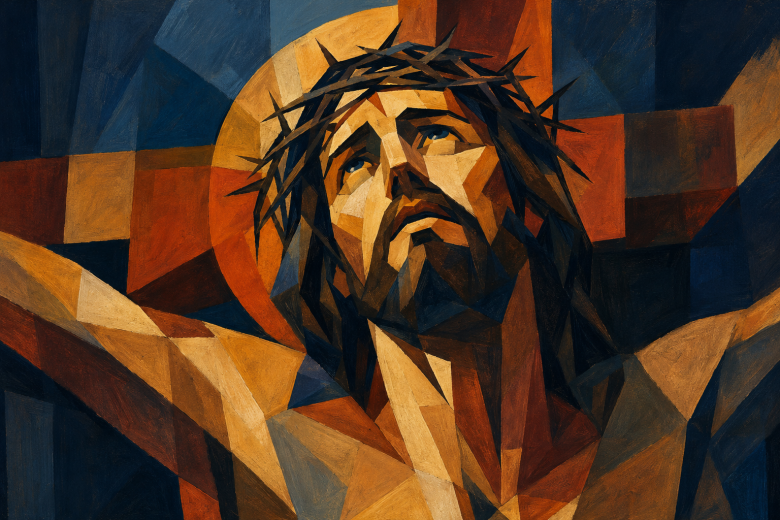
Thérèse reportedly spent long periods contemplating an image of Jesus with intense devotion. Yet no portrait or reliable description of the historical Jesus survives. What she adored was a face invented by a later artist and invested with meaning by Christian tradition—and by Thérèse herself. It was an image polished and shaped to reflect the imagination of those who contemplated it.
Whatever relationship existed was taking place entirely within her own mind. Belief projected a presence onto the image and then experienced that imagined presence as real.
Yet Thérèse’s example leads us to a less comfortable conclusion.
St Paul wrote: “For now we see through a glass, darkly.”
We all live through imperfect images, memories and stories. We construct ideas of other people, ourselves and the meaning of life, then respond to those constructions as though they were ultimate reality.
Thérèse’s delusion is easier to recognise because its object was a devotional portrait of an unknowable face. Our own are less obvious because they are shared by those around us. Who, then, is to say that one delusion is necessarily better than another? The hope lies in clearing away the clouds of delusion surrounding us, so that we may see reality more sharply and accurately.